Cardiovascular illness is the main explanation for dying within the U.S. and all over the world. Although it’s held the highest spot for many years, it wasn’t at all times the king of mortal maladies. Its ascension was propelled by two of medical science’s best successes.
“Earlier than the 20th century, coronary heart illness was an unusual explanation for dying,” says Dr. Michael Shapiro, a professor of cardiology on the Wake Forest College Faculty of Medication. Bacterial infections corresponding to tuberculosis and dysentery, in addition to smallpox and different contagious viruses, have been widespread killers. “Antibiotics and vaccines modified all the pieces.”
Some specialists consider that gene enhancing utilizing CRISPR applied sciences might be medical science’s subsequent large breakthrough—an development that permits the human race to smash by means of the longevity ceiling imposed by coronary heart illness, and perhaps additionally different widespread killers. At some point, hopefully, “CRISPR expertise might be used to deal with many situations, for instance neurological illness, cancers, and heart problems,” says Dr. Qiaobing Xu, a gene-editing researcher and professor of biomedical engineering at Tufts College.
Maybe essentially the most tantalizing of those functions entails decreasing ldl cholesterol, particularly the “dangerous” sort: low-density lipoprotein (LDL) ldl cholesterol. “Whereas ldl cholesterol is an important molecule for myriad organic processes, if blood ranges of LDL ldl cholesterol get too excessive, the ldl cholesterol can accumulate on the partitions of the arteries, forming congestive deposits referred to as plaques,” Shapiro says. These plaques immediately trigger or contribute to many types of heart problems. “Managing ldl cholesterol is a large a part of my job as a heart specialist centered on prevention.”
Whereas a poor weight-reduction plan, stress, lack of train, and different life-style elements can result in ldl cholesterol issues, genetic elements additionally play a task. Some genes that regulate blood ranges of LDL ldl cholesterol seem like good targets for CRISPR gene-editing applied sciences. Already, analysis in non-human primates has discovered that enhancing ldl cholesterol genes seems to be each secure and efficient for the mitigation of heart problems. And, earlier this yr, the primary human underwent gene enhancing for the remedy of excessive ldl cholesterol.
The science underlying CRISPR and gene enhancing for LDL ldl cholesterol is quickly advancing. Nonetheless, some main hurdles stay, and specialists warn of the potential for unanticipated dangers.
The science of gene enhancing for ldl cholesterol
CRISPR is an acronym for clustered usually interspaced quick palindromic repeats. These are segments of DNA present in some sorts of micro organism. These segments act like storage containers for snippets of genetic materials lower from defeated viral pathogens. The micro organism retailer these snippets as a way to improve their innate immunity from future threats.
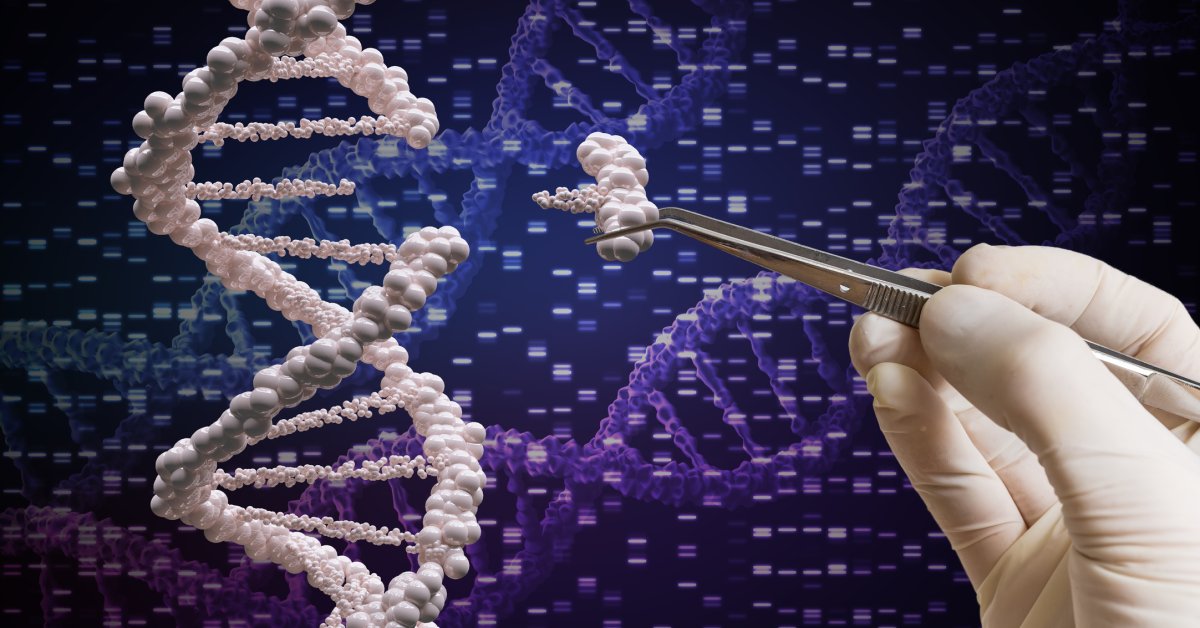
Throughout the previous decade, researchers have discovered how one can harness these CRISPR-related organic processes to edit the genetic materials of dwelling organisms, together with folks. “Gene enhancing entails two items,” Xu says. There’s an endonuclease—an enzyme—that performs the genetic alteration, and there’s additionally a information RNA that ensures the endonuclease is barely engaged on the specified a part of the genome. “You place these two items collectively, and you may modify the genome,” he says.
Typically a 3rd piece is critical: As Xu says, some types of gene enhancing are finished ex vivo, or exterior the physique. The related cells are eliminated and genetically modified in a lab. They’re then put again into the identical particular person in order that they will multiply and displace the outdated unedited cell kind. This ex vivo course of can be utilized to vary the genetic materials of blood cells, for instance, and has been utilized to deal with situations corresponding to sickle cell illness.
However a second, extra advanced technique of gene enhancing entails in vivo alterations to an individual’s genetic materials. That is needed when the related materials can’t be eliminated—for instance, when it’s housed in an organ. In these cases, a supply car is required to soundly carry the injected CRISPR expertise to the right location contained in the human physique. Xu was a part of a staff that revealed groundbreaking analysis in 2021 within the Proceedings of the Nationwide Academy of Sciences. That analysis recognized a particular kind of lipid nanoparticle that would carry CRISPR gene-editing materials particularly to the liver, which is the location of the modifications wanted to deal with ldl cholesterol issues.
The power to edit genetic materials is barely helpful in case you’ve recognized DNA sequences or mutations that immediately contribute to the event of well being issues. Within the case of LDL ldl cholesterol, researchers consider they’ve recognized two such targets. The invention of these concerned nifty deductions that will make Sherlock Holmes proud.
“About 20 years in the past, there was a analysis group in France that was learning various French households that had a comparatively widespread inherited situation known as familial hypercholesterolemia, or FH,” Shapiro says. Folks with FH have unusually excessive ranges of LDL ldl cholesterol from start and, as a consequence, are at excessive threat for untimely heart problems. Nonetheless, the French kindred didn’t have any mutations within the recognized FH genes. The French researchers, working with one other staff in Montreal, Canada, recognized a particular downside mutation on this kindred. The mutation causes a protein referred to as PCSK9 to bind to receptors that will usually assist take away LDL ldl cholesterol from the blood. “The overwhelming majority of the time, mutations make a protein {that a} gene encodes for much less efficient, and that is known as a loss-of-function mutation,” he says. “However on this French kindred, it turned out that the PCSK9 gene mutation was a gain-of-function mutation.”
As a result of such mutations are unusual, researchers who checked out this work theorized that some folks could be born with its reverse—that’s, a loss-of-function mutation on the PCSK9 gene. Theoretically, such a mutation would decrease ranges of blood ldl cholesterol and heart problems. “They appeared for this in massive populations, and certain sufficient, they discovered a naturally occurring loss-of-function mutation that reduces LDL ldl cholesterol and makes folks nearly resistant to atherosclerosis,” Shapiro says.
The invention of the PCSK9 gene and the protein’s position in hypercholesterolemia led to the event of PCSK9 inhibitors, a category of ldl cholesterol medicine designed to restrict PCSK9 exercise. However this discovery additionally supplied an ideal goal for CRISPR gene-editing therapies. Right here was a mutation that happens naturally, and that lowers LDL ldl cholesterol. Simply as importantly, the mutation wasn’t related to any recognized well being issues. All of this means that utilizing CRISPR applied sciences to make such a modification might be each secure and efficient. “Researchers noticed all this with the PCSK9 gene and began saying sure, CRISPR remedy is sensible,” he says.
Researchers, together with Xu, have since recognized a second gene—Angptl3—that performs an necessary position in regulating blood ranges of ldl cholesterol and triglycerides. “If we are able to knock down each of these two proteins—PCSK9 and Angptl3—that ought to result in decrease lipid and levels of cholesterol in plasma, and that may lower the danger of heart problems,” Xu says.
Learn Extra: Tips on how to Decrease Your Ldl cholesterol Naturally
Potential pitfalls
Up to now, the analysis on CRISPR and its cholesterol-lowering genetic targets has been nothing in need of revolutionary. Most observers applaud the science and categorical enthusiasm about its prospects. However most additionally mood their enthusiasm with realism—and a few considerations.
“One of many large challenges goes to be proving security and specificity in people,” says Dr. Christie Ballantyne, chief of cardiology and cardiovascular analysis at Baylor School of Medication. “You’re speaking about making a everlasting change to somebody’s DNA, and there are considerations that any unfavorable results might take a very long time to point out up.”
The preliminary medical trials (together with these already deliberate or in progress) will embrace folks with critical inherited ldl cholesterol problems—instances the place the professionals and cons clearly favor gene-editing remedy. Nonetheless, the massive hope is that this remedy might ultimately be carried out as a safety measure—earlier than somebody has lived for years or many years with elevated ranges of ldl cholesterol. Which means going inside a comparatively wholesome particular person and performing fine-tuned work on very particular elements of their DNA. In essence, it’s like placing out a small hearth that’s prone to unfold—however hasn’t unfold but. And any time you play with hearth, somebody might get burned. “You must particularly silence some genes and never others, which isn’t simple,” Xu says. “Warning is required, and the considerations folks have are legitimate.”
Even when all of the promising analysis pans out and the remedy works, there are causes to query how broadly it is going to be embraced.
“We have already got some monoclonal antibody therapies that focus on PCSK9 which are very efficient,” Ballantyne says. Statins, which for years have been the go-to remedy for folks with average or extreme ldl cholesterol issues, have additionally confirmed to be each secure and efficient. They’re additionally low cost. (Shapiro advocates for his or her wider deployment. “There’s quite a lot of misinformation on the market on statins,” he says. “Whereas they will trigger nuisance side-effects like muscle aches and ache in a minority of sufferers, they’re one of the vital scrutinized medicine, they usually’ve turned out to be extraordinarily secure.”)
“Let’s say you’re 40, your ldl cholesterol is actually excessive, and your alternative is between a statin that’s supported by research with a whole bunch of hundreds of customers, or gene enhancing, which can completely change one thing in your liver,” Ballantyne says. “I believe most individuals are going to select the statin.”
However, one of many greatest points with the ldl cholesterol medicine we now have at this time is that, though they work, some folks received’t take them. “I can’t even get some individuals who have had a coronary heart assault to remain on statins,” Shapiro says. “About 50% of customers cease taking them inside a yr, and after 5 years, solely about 5% of customers are nonetheless on them.”
The problem of poor treatment adherence is a typical and intractable one all through the sphere of medication. There’s motive to consider that if folks have been satisfied of its security, a one-time gene-editing remedy can be very interesting when in comparison with taking a each day capsule for the remainder of their lives.
Learn Extra: What to Know About Excessive Ldl cholesterol in Children
Why CRISPR will not be going wherever
Virtually throughout the board, specialists say that gene-editing remedy is probably going right here to remain. “It’s nice science, and I believe the expertise goes to occur,” Ballantyne says.
He remembers that, when he was in medical faculty, monoclonal antibody remedy was the new new factor. Again then it had loads of naysayers, however they have been silenced way back. “It took a pair many years and there have been issues alongside the way in which, however now it’s in all places.” He thinks gene enhancing is prone to observe an analogous path.
Nonetheless, Ballantyne says that ldl cholesterol might show extra immune to CRISPR-based therapies than another medical situations. “If somebody has a deadly genetic illness with no remedy, that’s a extra easy risk-benefit calculation,” he says. “With ldl cholesterol, I believe which may not be such a simple shot on aim.”
Extra Should-Reads From TIME