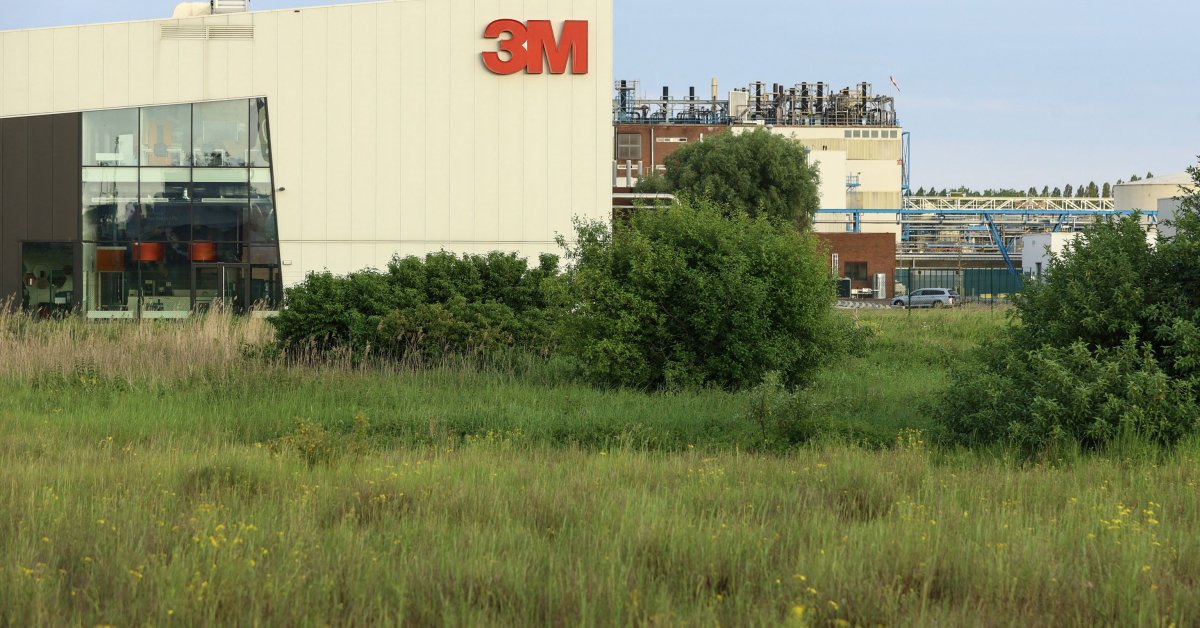
The feminine staff on the DuPont chemical firm’s Washington Works plant in Parkersburg, W. Va., weren’t given a lot of an evidence in 1981 after they have been all abruptly moved away from any a part of the manufacturing unit that produced a class of chemical compounds then often called C8. They actually weren’t advised about their eight lately pregnant coworkers who had labored with C8 and given delivery that 12 months—considered one of them to a child with eye defects and only a single nostril; one other to a child who had eye and tear duct defects; and a 3rd with C8 in its twine blood.
For any staff with any doubts, the corporate took pains to supply reassurances that each one was nicely. “In the course of the interval that C8 has been used at Washington Works,” a memo to the employees learn, “there isn’t a recognized proof that our staff have been uncovered to C8 at ranges that pose hostile well being results. There’s a dose degree the place nearly each chemical, even water, turns into toxic. [C8] has a decrease toxicity, like desk salt.”
C8 is right this moment outlined as two chemical compounds—PFOA and PFOS—which might be a part of a category of greater than 12,000 substances recognized collectively as PFAS, quick for per- and polyfluoroalkyl substances. Also referred to as “perpetually chemical compounds” as a result of that’s just about how lengthy they linger within the surroundings, PFAS are utilized in 1000’s of merchandise from textiles to nonstick pans to cosmetics to fire-fighting foam to meals packaging, and extra. The chemical compounds have been linked to a number of bodily ills, together with decreased fertility, hypertension in pregnant folks, elevated threat of sure cancers, developmental delays and low birthweight in kids, hormonal disruption, excessive ldl cholesterol, and decreased effectiveness of the immune system.
PFAS have been first developed within the 1940s and it was not till the late 1990s that the general public knew in regards to the risks they pose. However, in line with a brand new examine revealed in Annals of International Well being, DuPont and 3M—the main producers of the chemical compounds—had preliminary proof of PFAS toxicity as early because the 1960s, and knew broadly in regards to the risks the chemical compounds pose by 1970.
These revelations of what the 2 firms knew in regards to the harms of PFAS, and when, come because of an evaluation of data on file on the College of California San Francisco’s (UCSF) Chemical Business Paperwork Library. The paperwork, in flip, have been the product of discovery in two lawsuits: 1998’s Tennant vs. DuPont, by which the plaintiff complained that DuPont dumped greater than 7,100 tons of PFOA-laced sludge onto his property; and 2002’s Leach vs. DuPont, a category motion swimsuit by which greater than 80,000 West Virginia plaintiffs charged the corporate with contaminating the native water provide with PFOA and PFOS.
Learn extra: All The Stuff in Your House That Would possibly Comprise PFAS ‘Eternally Chemical compounds’
In 2020, a staff of researchers from UCSF and the College of Colorado dove into the paperwork, in search of to match the {industry}’s silence on—and in some instances direct cover-up of—the hazards of PFAS with comparable actions by the tobacco and fossil gas industries. The parallels, they discovered have been putting, with the PFAS producers suppressing unfavorable analysis, distorting public disclosure of analysis that does leak out, withholding info from staff who may be uncovered to harmful ranges of PFAS, and never disclosing proof of PFAS risks to the Environmental Safety Company (EPA) as required below the Poisonous Substances Management Act (TSCA). All of this might finally determine into future PFAS-related lawsuits, each from plaintiffs alleging diseases from publicity to the chemical compounds and from communities in search of remediation and clean-up of contaminated soil and groundwater. Definitely, the data examined by the researchers present that the businesses knew the dangers related to the substances they have been manufacturing.
“Accessing these paperwork permits us to see what the producers knew and when, but in addition how polluting industries hold crucial public well being info personal,” mentioned Dr. Nadia Gaber, an emergency drugs resident and the primary creator of the paper, in a press release. “This analysis is vital to tell coverage and transfer us in the direction of a precautionary reasonably than a reactionary precept of chemical regulation.”
In an e mail to TIME, DuPont—which has since diversified—mentioned, partially: “In 2019, DuPont de Nemours was established as a brand new multi-industrial specialty merchandise firm. DuPont de Nemours has by no means manufactured PFOA or PFOS. DuPont de Nemours can’t touch upon allegations contained in the us paper that relate to historic … issues.” 3M despatched an emailed remark as nicely, stating: “The paper is essentially comprised of beforehand revealed paperwork—as evidenced by the paper’s references part, which incorporates citations relationship again so far as 1962. 3M has beforehand addressed most of the mischaracterizations of those paperwork in earlier reporting.”
The Secrets and techniques Start
It was in 1961 that the dissembling across the risks of PFAS began. That 12 months, as the brand new examine particulars, the Canadian Medical Affiliation Journal revealed a report of employees in PFAS factories who fell unwell after smoking cigarettes that had been contaminated with PFAS-based Teflon. Shortly after, an account surfaced of a employee on a U.S. Air Power Base who someway got here into possession of a equally contaminated cigarette, smoked it and died on website. DuPont and the Air Power dismissed the account as a rumor—and the creator of the unique Canadian paper, bowing to {industry} and army strain, posted a retraction, saying partially, “The Union Carbide Company, upon additional investigation, and with the cooperation of DuPont, reported in December of final 12 months, ‘there have been no deaths or everlasting accidents recognized to stem from Teflon; all rumors of demise are false.’”
However DuPont knew higher. In 1962 an organization scientist conducting in-house research on Teflon that weren’t launched to the general public conceded that the substance could also be reactive to extreme warmth and dealing with. “Teflon might not be so inert,” the scientist concluded. A non-industry paper in 1965 confirmed that Teflon was related to “an epidemic of polymer fume fever,” an inhalation fever that happens when Teflon is heated to 300° C (572° F). DuPont remained silent on these findings.
Learn extra: The Problem of Eradicating Poisonous PFAS ‘Eternally Chemical compounds’ from Consuming Water
That wasn’t all the businesses have been studying in regards to the merchandise they have been manufacturing. A 1961 DuPont examine discovered that Teflon publicity led to liver enlargement in rats, with the in-house scientist recommending that the fabric ought to be dealt with “with excessive care” and that “contact with the pores and skin ought to be strictly averted.” In 1970, researchers on the Washington Works plant discovered that C8—or PFOA and PFOS—may very well be “extremely poisonous when inhaled and reasonably poisonous when ingested.” These findings weren’t made public both. A 1979 {industry} examine confirmed opacity within the corneas of rats uncovered to PFAS; and {industry} research in 1979 and 1981 confirmed liver degeneration in rats fed each excessive and low doses of PFAS.
Among the many human research the businesses performed, in 1994 researchers discovered that the half-life of C8 within the blood of staff was 1.5 to a few years. The researchers nonetheless concluded from that very same examine that “no hostile well being results have been present in 3M employees in a examine of liver operate in DuPont Washington Works.” However they added, “a potential enhance in prostate cancers” had been reported at totally different 3M plant manufacturing C8. Different findings amongst staff confirmed elevated liver enzymes in 61% of 30 employees examined, indicating irritation and harm to cells within the liver; and each 3M and DuPont discovered elevated fluorine—a marker of PFAS—within the blood of staff. The upper the extent of fluorine, the upper the extent of PFAS, and the better the danger of the entire diseases related to the chemical compounds.
Different {industry} and non-industry research from 1988 to 2020 confirmed a variety of further ills related to PFAS, together with testicular adenomas—or non-malignant growths; neurological harm; metabolic dysfunction; and fertility issues.
Working the Public
Because the proof of the hazards of PFAS mounted—each from firm analysis and impartial research—3M and DuPont started masking up what they have been studying, describes the brand new examine.
In 1991, researchers unaffiliated with the businesses started detecting PFAS in floor water. The businesses responded with a joint press launch stating: “In accordance with research by DuPont and 3M Company, C8 has no recognized poisonous or unwell well being results in people at focus ranges detected.”
In 2000, well being officers in Lubeck, W. Va., discovered that a number of types of PFAS, together with C8, have been current within the native consuming water. In response, DuPont reassured the officers that each one was nicely. The officers repeated the corporate line publicly, stating that, “DuPont reviews that it has toxicological and epidemiological information to help confidence that publicity pointers established by DuPont are protecting of human well being.”
However by now, the genie was out of the bottle. Researchers unaffiliated with the businesses have been publishing increasingly research on the dangers of PFAS linking it to elevated threat of sure cancers and different ills; the Tennant case had already been adjudicated and the Leach case was coming. And in 2000, 3M even introduced it will not be manufacturing the PFAS-based fabric-protecting Scotchguard. In an in-house e mail discussing the announcement, a DuPont lawyer acknowledged that the chemical is “too persistent within the surroundings and will get into our blood.” He added, “The plant acknowledges it should get public first…higher late than by no means.”
In 2002, after Leach was adjudicated, a DuPont vice chairman tried to enlist assist from an unlikely supply: the EPA. “Pressing: EPA motion wanted,” the vice chairman wrote to the company. “We’d like the EPA to rapidly (like very first thing tomorrow) say the next…Client merchandise offered below the Teflon model are secure [and] there are not any human well being results recognized to be attributable to PFOA.” The EPA didn’t accommodate the corporate’s request.
By now, in fact, the hazards of PFAS are well-known, with the chemical turning up in all method of beforehand sudden locations, together with rest room paper, menstrual merchandise, and speak to lenses. The EPA has already regulated permissible ranges of PFOA and PFOS in consuming water, and is working so as to add six extra sorts to that listing by 2026. Public demand is resulting in a rising marketplace for PFAS-free merchandise, leaving firms like DuPont and 3M both to desert—or a minimum of curb—the chemical compounds or get left behind. As for the businesses’ reputations, research just like the just-released one may make cleansing them up a tough job.
“These paperwork reveal clear proof that the chemical {industry} knew in regards to the risks of PFAS and did not let public regulators, and even their staff know the dangers,” mentioned Tracy Woodruff, director of the us program on reproductive well being and senior creator of the paper, in a press release. “As many international locations pursue authorized and legislative motion to curb PFAS manufacturing, we hope they’re aided by the timeline of proof introduced on this paper.”
Extra Should-Reads From TIME